
Published by thegangchil.com Editorial Team | Sleep & Circadian Health Pillar
Last Updated: May 14, 2026
In this how to improve sleep quality naturally pillar guide, we are moving beyond the surface-level advice of “don’t drink coffee.” At thegangchil.com, we look at sleep as a biological symphony that requires the right conductor. Whether you’re dealing with chronic insomnia or just want to wake up feeling truly refreshed for once, this guide will show you how to work with your biology, not against it.
To optimize sleep, you must master three pillars: Circadian Alignment (viewing sunlight in the morning), Thermoregulation (keeping your bedroom at 65°F/18°C), and Adenosine Management (delaying caffeine and managing “sleep pressure”). Natural improvement comes from a consistent 24-hour cycle of habits, not just what you do in the hour before bed. High-quality sleep is defined by its continuity and the time spent in deep (Slow Wave) and REM stages.
Inside your brain, a tiny cluster of cells called the Suprachiasmatic Nucleus (SCN) acts as your master clock. This clock responds to one thing above all else: Light. When light hits your retinas in the morning, it triggers a “timer” for the release of melatonin approximately 14 hours later. If you don’t get that morning light, your “sleep timer” never starts correctly.
During the night, your brain undergoes a literal “power wash.” The Glymphatic System—a waste-clearance system—becomes ten times more active during deep sleep, flushing out toxic proteins like beta-amyloid (linked to Alzheimer’s). According to the NIH (2024), even one night of restricted sleep significantly increases these neurotoxic levels. This is why how to improve sleep quality naturally isn’t just about comfort; it’s about neurological longevity.
Most people think sleep begins when they close their eyes. In reality, sleep begins the moment you wake up. Your daily movement, your stress levels, and your meal timing all dictate the “sleep pressure” (Adenosine) that builds up throughout the day. If you take a late-afternoon nap or consume caffeine at 4:00 PM, you effectively “cheat” your sleep pressure, leaving you wide awake at midnight.
| Stage | Function | Consequence of Lack |
|---|---|---|
| Deep Sleep (N3) | Physical repair, immune boost, growth hormone. | Body aches, slow recovery, low immunity. |
| REM Sleep | Emotional processing, memory, creativity. | Irritability, “Brain Fog,” anxiety. |
| Light Sleep (N1/N2) | The transition state; memory consolidation. | Difficulty learning new skills. |
Many of us are accidentally sabotaging our rest through habits we think are helpful. Here are the big ones:
“To fix your sleep, you must fix your boundaries. 10 hours before bed: No more caffeine. 3 hours before bed: No more food. 2 hours before bed: No more work. 1 hour before bed: No more screens. 0: The number of times you hit the snooze button in the morning.” — Inspired by findings from the Mayo Clinic and Harvard Sleep Medicine (2025).
Elena, a 42-year-old nurse, had relied on over-the-counter sleep aids for five years. She felt “hungover” every morning. After studying how to improve sleep quality naturally on thegangchil.com, she made one radical change: she kept her bedroom at 64°F and took a hot bath 90 minutes before bed. This sounds counterintuitive, but the bath causes blood to rush to the skin’s surface, which actually drops the core body temperature—the essential signal for deep sleep. Within a month, she was sleeping through the night without pills.
STEP 1: LIGHT ANCHOR
Get 10 mins of sunlight within 30 mins of waking.
STEP 2: CAFFEINE CURFEW
Stop all stimulants by 12:00 PM (or 10 hours before bed).
STEP 3: THERMAL DROP
Cool your room; use a weighted blanket for nervous system calm.
STEP 4: MENTAL DUMP
Write your ‘To-Do’ list at 7 PM so it doesn’t haunt you at 2 AM.
STEP 5: DARKNESS IMMERSION
Use blackout curtains and an eye mask for 100% darkness.
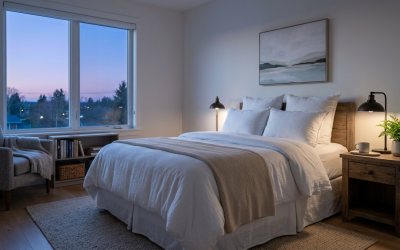
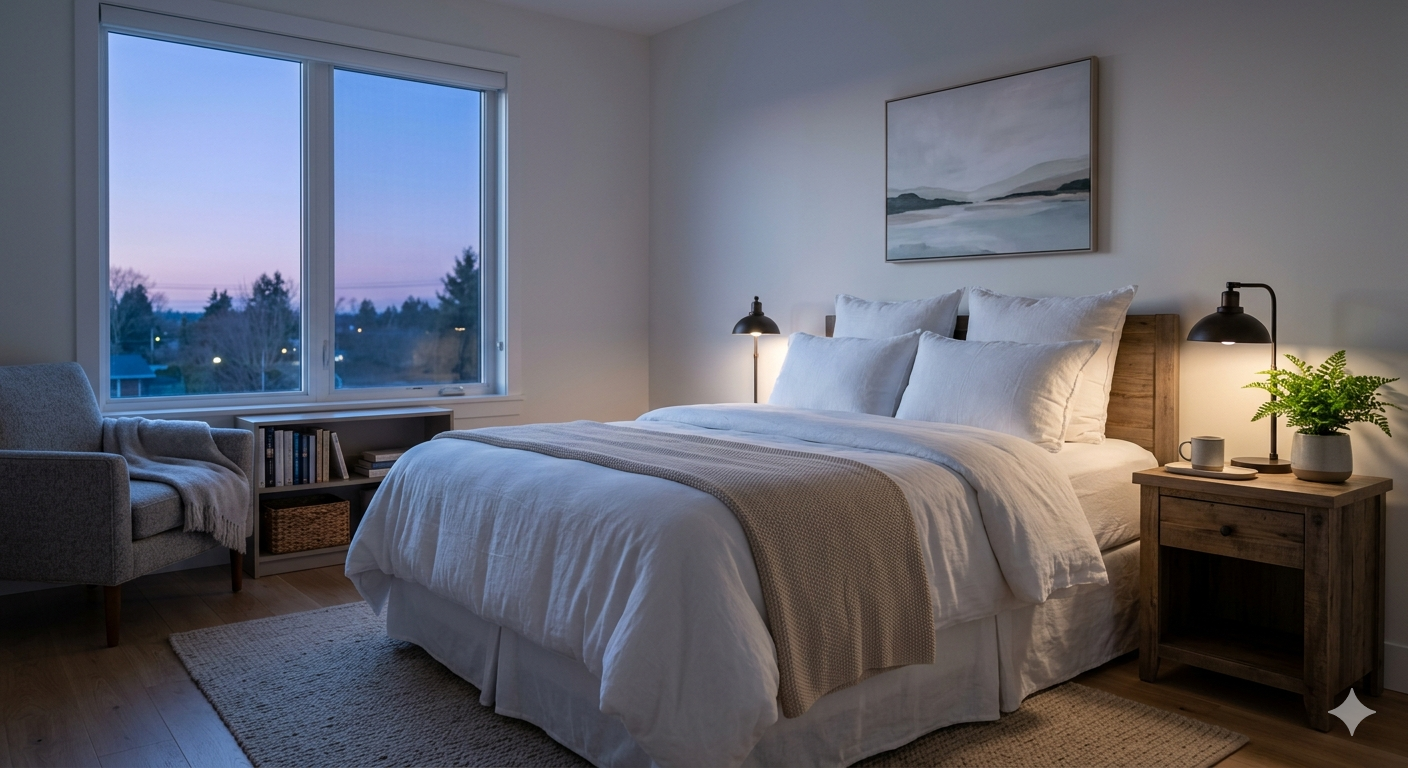
Your bedroom should be two things: A Cave and a Sanctuary. According to Harvard Health (2024), the ideal sleep temperature is surprisingly cool—around 65°F (18°C). Your brain needs to drop its temperature by about 2–3 degrees Fahrenheit to initiate sleep.
While complete silence is best, “Pink Noise” (which sounds like steady rain or rustling leaves) has been shown to enhance deep sleep waves in older adults. Similarly, the scent of lavender has been clinically proven to increase the percentage of deep, slow-wave sleep. These are easy, natural additions to your how to improve sleep quality naturally toolkit.
| Option | The Risk (Synthetic) | The Reward (Natural Support) |
|---|---|---|
| Melatonin Pills | Dependency / Hormonal disruption. | Sunlight (Naturally boosts melatonin later). |
| Sleeping Pills | “Z-drug” grogginess / Memory loss. | Magnesium Glycinate (Muscle/Nerve relaxation). |
| Energy Drinks | Adrenal fatigue / Heart palpitations. | Chamomile or Tart Cherry Juice (Natural sleep aid). |
Stop “trying” to sleep. Sleep is an involuntary process. The more you demand it, the more your brain stays alert to check if you’re sleeping. Use the “Cognitive Shuffle”—think of random, unrelated objects (Apple, Sandal, Cloud)—to distract the logical brain into a dream-like state.
Sleep apnea is a significant risk often mistaken for “just snoring.” If you wake up gasping or feel exhausted despite 8 hours of sleep, see a specialist. CDC (2024) reports that untreated apnea increases heart failure risk by 140%.
Replace your “Doom-scrolling” with a gratitude journal. Research shows that writing down things you are grateful for activates the hypothalamus and helps the brain shift from “Threat Mode” to “Safety Mode,” facilitating faster sleep onset.
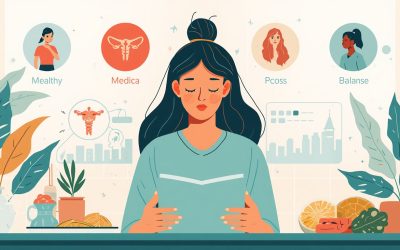
Beyond lifestyle, biological factors like Perimenopause, Thyroid dysfunction, and Vitamin D deficiency can wreak havoc on your sleep. In the modern world, “Tired but Wired” is often a result of Cortisol being high when it should be low. Chronic stress keeps you in Stage 1 and 2 sleep, preventing you from ever reaching the “restorative” deep sleep required for health.
If you have practiced the habits in this how to improve sleep quality naturally guide for more than 4 weeks with no change, it is time to consult a doctor. You may benefit from:
1. How many hours do I really need?
Most adults need 7–9 hours. Less than 6 hours is chemically identical to being legally intoxicated.
2. Can I use blue-light glasses?
They help, but they aren’t a “get out of jail free” card. Dimming the overall house lights is more effective.
3. Is tart cherry juice effective?
Yes, it’s a natural source of melatonin and tryptophan. Many find it helpful for sleep duration.
4. Why do I wake up at 3 AM?
This is often a blood sugar drop or a “cortisol spike.” A small, high-fat snack (like a few walnuts) before bed can help.
5. Does exercise help sleep?
Yes, but try to avoid vigorous cardio within 3 hours of sleep as it raises core temperature.
6. Should I use a weighted blanket?
They are excellent for anxiety-induced insomnia as they provide “deep pressure touch” which lowers cortisol.
7. How does thegangchil.com help with sleep?
We offer soundscapes and breathwork guides specifically designed to lower heart rate variability (HRV) for sleep.
8. Can I nap?
Keep naps to 20 mins and before 3:00 PM. Anything longer or later will steal from your “Sleep Bank” at night.
9. Is it okay to read on a Kindle?
E-ink displays are better than tablets, but a physical book is best to avoid any light stimulation.
10. Does sex help sleep?
Yes. The release of oxytocin and prolactin acts as a natural sedative for both men and women.
Your life is built on the foundation of your sleep. When you learn how to improve sleep quality naturally, you aren’t just getting more “rest”—you are giving yourself the gift of a better personality, a stronger heart, and a sharper mind. Start with one change tonight. Maybe it’s leaving the phone in another room. Maybe it’s opening a window. Your future self will thank you for the quiet.
Rest well. Explore more at thegangchil.com.
Posted 12:08 pm | Thursday, 14 May 2026
| nm